
A Video Showed Up On My Feed With An Israeli Flag And Something Sinister. Then I Found The Pattern.
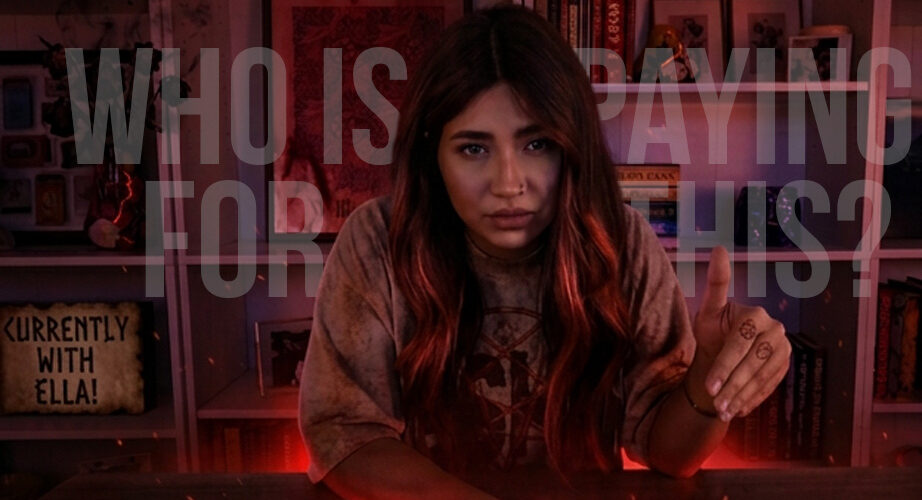
A video showed up on my feed a few days ago. The thumbnail had an Israeli flag on it, some ominous text, and the kind of framing that’s designed to make you go “wait, what?” So I clicked. The video is called “They’re Changing Your Food. Nobody’s Going To Tell You.” It runs about twenty minutes, it’s extremely well produced, and it’s the work of a YouTuber called Ella Marie, whose channel Currently with Ella describes itself as a one-woman operation: every video researched and edited by her, alone. I had to watch it because Jewlicious wrote a post about Israel’s dairy-free milk technology and how cool it is that kosher consumers can now drink Lactose free milk with our steak. I was really curious to hear another perspective on the matter. What could possibly go wrong?
I want to be fair to it before I take it apart, because some of it is true. Bioreactors are real. Precision fermentation is real. Cell-cultured cocoa is real, and it is coming to your Oreos. Two of the three leading precision-fermentation dairy companies in the world, Remilk and Imagindairy, are in fact Israeli. Mondelez has in fact invested in cell-cultured cocoa butter. Cargill has in fact signed a deal with an Israeli cocoa-tech startup. None of this is made up.
What is built on top of these true facts, though, is a load-bearing structure of nonsense, and the nonsense matters more than the facts because the nonsense is the actual point of the video. Let’s go through it. Then, because after watching this one I went and watched another video from the same channel and a pattern started to emerge, we’ll talk about the channel itself, because that turns out to be the more interesting story.
The Premise Is Backwards
The video’s central thesis is that “our tax dollars,” meaning American taxpayer dollars sent to Israel as foreign aid, freed up the Israeli government to build a subsidized food-tech ecosystem, which is now quietly slipping unlabeled lab-grown ingredients into American snack food. The phrase “our tax dollars” gets repeated like a drumbeat. It’s the emotional center of the whole piece.
It is also almost exactly backwards.
The vast majority of US assistance to Israel is Foreign Military Financing, and FMF is not a check Israel deposits and spends as it pleases. By design and by law, that money is a credit that must be spent on American-made weapons systems. Roughly three-quarters to four-fifths of it goes straight to Lockheed Martin, Boeing, Raytheon, and similar companies, supporting thousands of American manufacturing jobs in the process. It is, structurally, a subsidy for the US defense industry that happens to result in Israel receiving military hardware. It is not a transfer of cash into Israel’s general budget, and it is certainly not the thing paying for Israeli universal healthcare or free higher education, both of which, incidentally, Israelis fund themselves through some of the highest tax rates in the developed world.
There is a much smaller, genuinely bilateral agricultural research fund called BARD, which has put a few hundred million dollars into joint US-Israel agricultural research since 1979. That program is real, and some of that money has gone toward alternative-protein research. But it is a joint research fund, the kind of thing the US runs with dozens of allied countries, not a backdoor subsidy for “Israeli food independence.” Treating BARD as evidence that American taxpayers built Remilk’s lab is a bit like pointing to a Fulbright grant and concluding that the State Department personally financed someone’s cookbook.
So when the video says “this is just what 70 years of compounding advantage looks like, paid for by our tax dollars,” the compounding advantage may be real, but the funding mechanism described simply does not exist in the form claimed. If you wanted to write an honest video about why Israel punches above its weight in food-tech, the actual answer is fairly mundane: it’s a small, wealthy country with an enormous concentration of agricultural research institutions, a government venture-capital arm that funds a lot of things besides food, and decades of genuinely joint research relationships with American universities and companies. Mundane doesn’t get you fifty-four videos in seven months, though.
Two Different Technologies, Treated as One Scary Blob
Before we go further, a correction the video itself actually sets up and then immediately abandons: precision-fermented dairy and cultivated meat are not the same thing, and conflating them is doing a lot of the video’s emotional work.
Cultivated, or “cell-cultivated,” meat really is what people picture when they hear “lab-grown”: animal cells, taken from a living animal without slaughter, grown in a bioreactor into actual muscle and fat tissue. It is real animal protein, just produced without the animal being killed. This is the category facing bans in Italy, Florida, Texas, and elsewhere, and it’s the one regulators are wrestling with how to label, with the USDA leaning toward “cell-cultivated” specifically to distinguish it from ordinary fermentation.
Precision-fermented dairy proteins are a completely different process. You’re not growing animal cells at all. You’re taking the genetic instructions for a single protein (say, whey or casein), inserting them into yeast or bacteria, and letting that microorganism do what yeast and bacteria have done in fermentation for millennia: eat sugar and produce something. The output is a protein molecule that is structurally identical to the one a cow makes, but no animal cell was ever involved. It’s much closer, mechanically, to how insulin or rennet have been produced for decades, including, often, the rennet used in kosher and vegetarian cheese, than it is to growing a steak in a tank.
The video’s own bioreactor explainer at the start actually describes this distinction reasonably accurately. Then it spends the rest of the runtime calling everything “lab-grown” anyway, because “lab-grown chocolate” sounds like science-fiction body horror and “a strain of yeast that’s been taught to make cocoa butter” sounds like, well, what it is.
And on the question of whether the cocoa butter itself is gross or detectable: by every account from the companies and trade press covering it, no. Mondelez’s own prototype chocolate bars made with Celleste Bio‘s cell-cultured cocoa butter are described as bio-identical to conventional cocoa butter: same fatty acid profile, same snap, same melt, same mouthfeel. That’s rather the point of the technology: it’s not a substitute with a different taste that you’re being tricked into accepting, it’s the same molecule, made via a different and much less land-intensive route. You can be uneasy about the supply-chain politics of that. You cannot honestly market it as “ew, gross, lab sludge in your Oreos.” That’s vibes, not information.
Nobody Asks Why These Products Exist
Here is the thing that bothers me most about the video, more than the aid math: it spends twenty minutes being angry that lab-grown dairy and cocoa exist, and at no point seriously engages with why anyone is trying to make them.
Conventional animal agriculture is genuinely one of the worst things we do to the planet. Livestock production, raising the animals and growing their feed, accounts for something close to sixty percent of greenhouse gas emissions from the entire global food system, while providing well under a fifth of the calories humans eat. It is also a major driver of land use and biodiversity loss. This is not a fringe claim; it shows up in essentially every serious analysis of food and climate.
Precision-fermented dairy proteins, in the best life-cycle assessments, show dramatic reductions against that baseline: on the order of 90-plus percent lower greenhouse gas emissions and similarly large reductions in land and water use compared to conventional dairy protein. I’ll note honestly that not every study agrees on the magnitude. At least one independent assessment found the climate benefit much smaller than the industry’s own figures, depending heavily on what powers the fermentation tanks. That’s a real and worthwhile debate. But it’s a debate about how big the environmental benefit is, not about whether the entire enterprise is some kind of plot.
And there’s a basic public health angle the video skips entirely: a meaningful chunk of the world’s population is lactose intolerant, and molecularly identical dairy proteins produced without the lactose, without the cow, and without the associated emissions are not obviously a worse outcome for those people. Cell-cultured cocoa, similarly, exists because West African cocoa supply chains are genuinely fragile, prone to crop failure, disease, and well-documented labor abuses, and because cocoa prices spiked to historic highs in 2024. “A chocolate company looked for a way to de-risk its supply chain after a price shock” is a less thrilling story than “a 100-year ethnic conspiracy reaches its final form in your Oreos,” but it has the advantage of being the actual story.
The “53 Hazards” Claim Is About Meat. The Video Is Mostly About Dairy and Cocoa.
One more piece of sleight-of-hand worth flagging on its own, because it’s a good illustration of how the video works. Late on, it cites a 2023 FAO/WHO report identifying “53 potential health hazards associated with cultivated meat,” including growth factors linked to cancer, and uses this as the closing health-scare beat, the “cherry on top,” as the video itself puts it, for everything that came before.
The report is real. The number is real. It is also, very specifically, about cultivated meat: the cell-culture, grow-actual-animal-tissue-in-a-bioreactor category we already discussed. The report’s own framing makes clear that most of the hazards it identifies aren’t novel at all; they’re the same categories of hazard, biological, chemical, physical, allergen, process-related, that exist in any food production system, just requiring attention to the specific new inputs (growth media, growth factors, etc.) that cultivated meat introduces. One of the report’s own expert consultants, who in 2013 produced the world’s first cultivated burger, said the panel evaluated the doomsday scenarios popular among critics and found them too unlikely to merit further discussion, concluding that food safety risks in cultivated meat are broadly similar to those in conventional meat.
None of that is the point, though. The point is that the video spends roughly eighteen of its twenty minutes on precision-fermented dairy and cell-cultured cocoa butter, neither of which involves growing animal cells, growth factors, or anything the FAO/WHO report is actually about, and then, in its final minute, reaches for a meat-safety report to cast a vague cancer shadow over the entire previous discussion. It’s the same move as “lab-grown”: grab the scariest available terminology and hazard data from the adjacent category and let it bleed across onto the thing you’re actually talking about. A viewer walking away with “growth factors… cancer… my Oreos” has been left with an impression the report does not support for the products the video spent the most time on.
The Sharon material is also worth pausing on, separately from the food-tech argument entirely, because it’s a good example of how the video handles history when history is inconvenient to its narrative. Ariel Sharon was, by any honest accounting, a deeply controversial and at times brutal figure; Sabra and Shatila alone ensures that. The video calls him “evil” and leaves it there, which: sure, defensible as one assessment among several, fine. But the same Ariel Sharon, as prime minister in 2005, also pushed through the Gaza disengagement, dismantling 21 settlements and removing roughly 9,000 Israeli settlers, over the furious objections of his own party, in a move that effectively ended his political career within the Israeli right. Whatever else is true of the man, “uncomplicatedly evil” doesn’t survive contact with that decision, which is precisely the kind of thing a one-line “this guy was not it” framing exists to avoid having to grapple with. History is rarely as clean as a video that needs to get to the next beat in twenty minutes requires it to be.
“Allegedly,” They Want to Kill Us
About seventeen minutes in, after walking through a century of Israeli dairy-industry history, some of it accurate, all of it presented as the secret hidden cause of a 2026 Cargill partnership, the video pauses to say, explicitly, “this is not conspiracy, okay, this is just what 70 years of compounding advantage looks like.”
I’d gently suggest that real historical analysis doesn’t generally need to pause and reassure you that it isn’t a conspiracy theory. That’s the kind of line you insert when you can feel the shape of what you’re building and want to get ahead of the obvious objection.
And then, a minute or so later, almost as an aside, tossed off in the same breezy tone as everything else: “Plus they want to kill us. Allegedly. Plus Bill Gates gets off on it. Allegedly.”
It’s worth being precise about what’s being gestured at here, because it’s a whole worldview compressed into eight words. The “Great Reset” and associated depopulation narratives hold, in their various forms, that a coordinated global elite, the World Economic Forum, Bill Gates, assorted billionaires and international bodies, are using crises (pandemics, climate policy, food system changes) as cover to consolidate control and, in the more extreme versions, to deliberately reduce the human population, often through the food and water supply or through vaccines. It’s a framework that’s been applied to mRNA vaccines, to “you’ll own nothing and be happy,” to 5G, and now, apparently, to your cocoa butter. The throughline across all of these is that ordinary explanations, supply chain economics, public health responses, climate mitigation, are covers for a hidden malicious intent, and that the people pointing this out are the only ones brave enough to say it.
The “allegedly” is how you reference all of that without having to defend any of it. It’s a wink, not a claim. If anyone objects, the answer is “I said allegedly,” and if no one objects, the framing has been deposited anyway, sitting right next to the Israel material so the two ideas can keep each other company in the viewer’s head. That’s the actual function of the line. It’s not a stray joke.
Put it together: a technological distinction the video itself draws and then discards, an aid relationship described in a way that inverts how it actually works, a hundred-year unbroken causal chain from Mandate-era dairy cooperatives to 2027 chocolate bars, a complicated historical figure flattened into a one-line villain, an explicit “this isn’t a conspiracy” disclaimer, and a wink at the Gates depopulation narrative. That’s a lot of work for a video about Oreos.
Then I Watched Another One
Curious whether this was a one-off, I watched another recent “Currently with Ella” video, titled “The Man They Had to Kill to Stop.” It’s about John F. Kennedy’s final year in office: his break with the CIA after the Bay of Pigs, his skepticism on Vietnam, and a real, well-documented 1963 standoff with Israeli Prime Minister David Ben-Gurion over inspections of Dimona.
The underlying history here is, again, mostly accurate. Kennedy really did send Ben-Gurion an ultimatum-toned letter in June 1963 demanding regular inspections of Dimona, warning that US “commitment to and support of Israel” could be “seriously jeopardized” otherwise, and Ben-Gurion really did resign as prime minister the day that letter was cabled to him. These are documented events sitting in the National Security Archive, and historians have long debated how much the Dimona standoff contributed to Ben-Gurion’s resignation.
What the video does with these facts is assemble them into a six-week timeline: Kennedy presses Israel on Dimona, Kennedy is assassinated, Israel’s nuclear program proceeds essentially unimpeded for the next sixty years, and let the juxtaposition do the arguing, while never quite saying the words out loud. “Israel got its bomb with a bonus of fifty years of American cover for it. And yet, we’re supposed to believe this is all a coincidence.” Same trick as the food video: “this is not a conspiracy, okay, this is public record” arrives at exactly the moment the video has finished building one.
It’s worth being blunt about what genre this is, because it has a name and a recent history. “Israel killed JFK” is not a fringe oddity this video stumbled into by accident. It’s a long-running Antisemitic conspiracy theory, the subject of an entire 2021 documentary, and something that resurfaced loudly in 2025 when a sitting member of Congress strongly implied the same connection on social media. A fabricated “lost JFK speech” denouncing Israel, debunked as an AI deepfake by forensic analysts, was circulating just weeks before this video went up. “Currently with Ella” doesn’t reference any of that directly. It builds its own version from real archival letters instead, which in some ways is more effective, because the underlying documents are genuine. But the conclusion it nudges viewers toward, without ever stating it as a thesis, is the same one that sitting member of Congress floated and the same one that documentary spent ninety minutes arguing. And just like the food video, it ends with an explicit tease for “part two,” the assassination and investigation itself, framed as something the creator is “already kind of cooking up,” with a request for likes and comments to gauge interest. If you wanted to design a format that maximizes debate-in-the-comments and ensures people come back for the next installment, “imply the explosive conclusion, disclaim having stated it, and promise the real reveal is coming” is close to optimal. Whether or not that’s the intent, it’s certainly the effect.
Two videos, same structure: open with a hook, establish the subject’s sympathetic credentials, walk through real documented history at a brisk clip, build toward a juxtaposition that implies a sinister causal connection without quite asserting it, insert an explicit “this isn’t a conspiracy” disclaimer at the moment of maximum implication, close with a tease for a follow-up promising to go further. Both land, gently, deniably, but unmistakably, on a flavor of “Israel is secretly behind something bad and nobody wants you to know.”
Then I Found The One Where She Just Says It
At that point I went looking for a third example, and I didn’t have to look far. A video called “They Banned Ye From An Entire Country And Proved His Point” covers the cancellation of Kanye West‘s planned Wireless Festival headline slot in the UK this summer, after sponsors pulled out and the UK government ultimately banned him from entering the country.
Most of this video is straightforward entertainment commentary, and some of it is fair enough on its own terms: festival promoters, sponsors, and politicians did all weigh in, and there’s a genuine conversation to be had about whether governments should be in the business of approving concert lineups. But about three minutes in, describing why sponsors pulled their support after initially approving the booking, the host says this: “The pressure from those who shall not be named. I can’t say it. You know I can’t say that.” A second voice off-camera agrees: “We know I can’t say that.” She laughs, and moves on.
Later in the same video, recounting West’s earlier controversies, she says the industry had no problem with him “saying stuff like slavery was a choice,” and that nobody had an issue with him until “he started talking about someone specifically, We know I can’t say that,” at which point “the industry had beef with Ye.”
This is not subtext anymore. In the food video, the connection between Israel and a shadowy “they” who “want to kill us” was a wink, an “allegedly” doing quiet work in the background. In the JFK video, the implication was built entirely out of timeline and juxtaposition, never named. Here, the video says the quiet part out loud, twice, as a bit, complete with a second voice confirming the joke, and moves on as if naming “the group everyone knows you’re not allowed to criticize” as the secret force behind a festival cancellation is just a fun aside. It is the single clearest moment across all three videos, because for once there’s no ambiguity left to argue about. The video itself frames criticism of a specific religious and ethnic group as a thing that cannot be said aloud, while saying it aloud, twice, as a joke between friends.
The rest of the video sits comfortably alongside that framing. The Board of Deputies of British Jews asking to meet with West only after he agreed not to perform is described as “a hostage negotiation” where “they wanted submission.” Actor David Schwimmer‘s public statement thanking sponsors for pulling out is mocked at length, contrasted with his silence on the war in Gaza, in a section that runs for several minutes. And toward the end, the video pivots approvingly to a recent Tucker Carlson commentary about Donald Trump not placing his hand on a Bible during his inauguration, framing it as a brave observation that “the same people” who said nothing about that are now upset about West performing at a festival. None of this is subtle once you’ve seen the “those who shall not be named” line. It’s the same cluster of ideas you’ll find across a recognizable corner of online commentary: a specific community framed as an unnameable, coordinating force behind unrelated cultural and political outcomes, delivered with a wink and a laugh so that calling it out makes you the humorless one.
To be fair, plenty of people across the political spectrum, including plenty of Jewish commentators, found the UK’s handling of the Wireless cancellation heavy-handed, and there’s a real debate to be had about government involvement in festival lineups and about proportionality in how Kanye West has been treated versus other public figures. None of that requires “those who shall not be named” as a punchline. The fact that it’s there anyway, played for laughs, in a video that otherwise reads as pop-culture commentary, is the tell.
So Who’s Behind This?
Here’s where it gets genuinely strange. “Currently with Ella” describes itself as a solo operation, one person, every video researched and edited by her alone, and has published 54 long-form videos in roughly seven months. That’s close to two a week, sustained, of the kind of video that involves pulling primary documents from places like the National Security Archive, structuring a coherent argument, writing a tightly paced script, recording narration, and editing in graphics and pacing that hold attention for fifteen to twenty minutes. People who do this professionally will tell you a single video at this level of polish typically runs forty to eighty hours of work. Sustaining that pace alone, with no gaps, implies either a genuinely extraordinary workload or that “solo creator” is doing some flexible definitional work: AI-assisted research and drafting, a production team that doesn’t appear on screen, or some combination of both.
There’s no face attached to the channel beyond “Ella,” no public biography, no institutional affiliation, nothing to tell you where any of this comes from. Just a voice, a deadline, and an enormous amount of output, twice a week, that keeps independently arriving at variations on the same conclusion. The channel’s branding, Texas references, an American flag and tractor emoji, visible Christian iconography, points toward an audience positioning aimed at a populist, heartland, Christian-right-adjacent demographic rather than the “coastal media” audience this kind of content often gets filed under, which may help explain how comfortably the “those who shall not be named” bit sits next to a sympathetic Tucker Carlson segment in the same video.
So here’s the question I keep coming back to. If one person genuinely can’t produce this much, this polished, this consistently, on this particular set of subjects, who is helping, and who is funding it? Is this a hobbyist with an unusually generous schedule and a knack for AI-assisted research tools, churning out content because the algorithm rewards “implied scandal” formats and this happens to be the lane that performs? Or is there something more organized behind an account that keeps landing, twice a week, on a recognizable cluster of ideas: Israel as a hidden hand behind unrelated bad outcomes, “those who shall not be named” as an inside joke, real documents and real news events arranged just so?
I don’t know the answer. I’d genuinely like to. But it’s the question that actually matters here, more than any individual claim about cocoa butter, Dimona, or a music festival. Each of these videos, on its own, is the kind of thing that gets fact-checked, shrugged at, and forgotten. A channel quietly producing two of these a week, for months, each one nudging viewers toward the same family of conclusions while insisting it isn’t doing that, and occasionally dropping the pretense entirely, isn’t a single piece of misinformation. It’s infrastructure. And infrastructure has owners.
One more number worth sitting with. The food video has pulled in roughly 517,000 views. The JFK video sits around 176,000. Most of the rest of the channel’s output, by contrast, lands at 5,000 views or under. That’s not a gradual climb, it’s two videos landing one to two orders of magnitude above everything else, and they happen to be the two videos built around this exact template: real documents, a likable host, and an implication that Israel is secretly behind something Americans should be afraid of. Maybe that just tells you what this genre does for distribution on its own, picked up and recirculated by spaces that specialize in exactly this kind of content, regardless of who made it. Or maybe it tells you why a channel that tried fifty other things at 5,000 views might keep coming back to the two that worked. Either way, the numbers are part of the pattern too.