
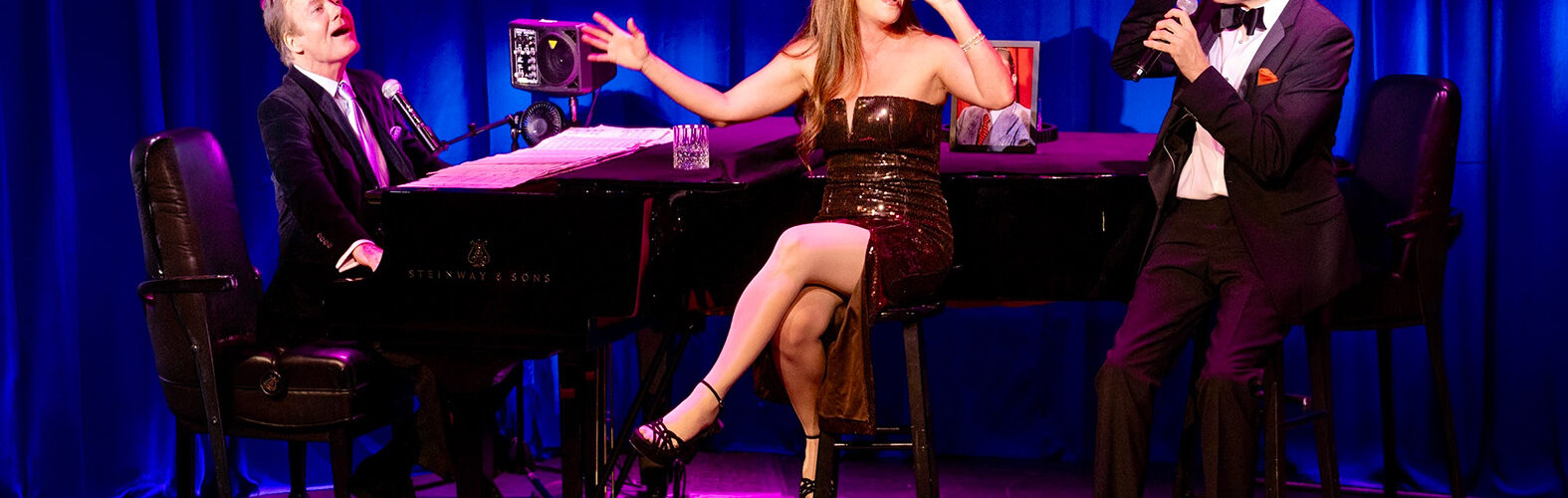
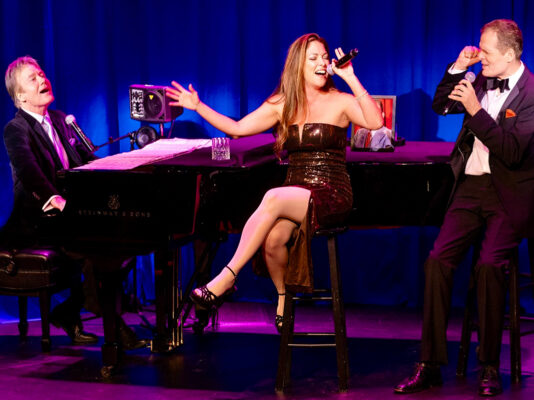
New York has had a turbulent few months at City Hall, and plenty of Jewish New Yorkers have felt it. Happily, the city still does one thing better than anywhere else, which is put on a show. Two wonderful ones are running right now at the same small theatre on the Upper West Side, one devoted to Frank Sinatra and the other to Burt Bacharach. Both are full of songs you already love, sung by people who clearly love them too, and an evening with either one is about the best antidote to the headlines I can think of. Jewlicious has a pair of tickets to each to give away. Details are at the bottom, for those who skip ahead. (I would.)
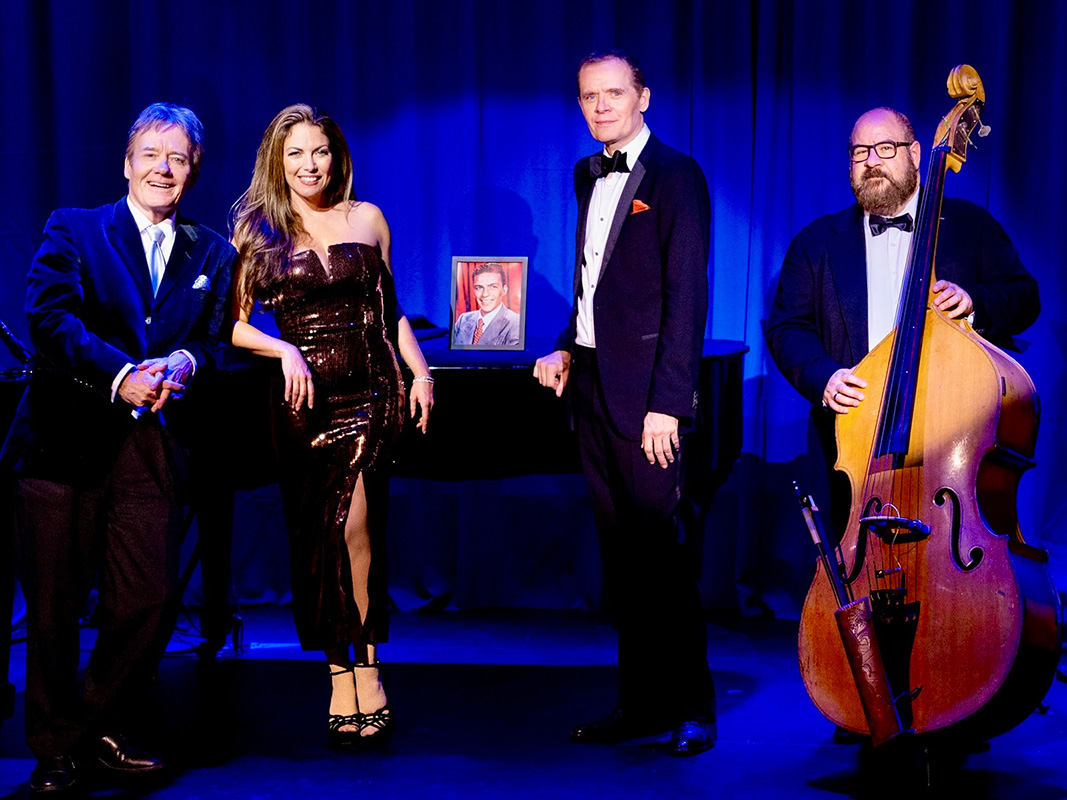
Our Sinatra: A Musical Celebration began in 1999 at the Algonquin’s Oak Room, which, if you’re going to start a Sinatra show somewhere, seems about right. It went on to a long Off-Broadway run, two national tours and something like a quarter century of club dates. This fall its three creators, Eric Comstock, Christopher Gines and Hilary Kole, are back on stage together for a 25th anniversary production.
What it isn’t is an impression. Nobody puts on a fedora and does the voice, apart from one comic bit late in the show that I’m told is the exception. Three singers and a piano get through roughly 50 songs in 90 minutes with no intermission, from the 1940s ballads through the 1950s saloon songs to the swinging 1960s material: “I’ve Got You Under My Skin,” “One for My Baby,” “The Lady Is a Tramp.” Many of the arrangements don’t copy his recordings, and some songs come with verses Sinatra himself never bothered to sing. The New York Times called the original “an utterly winning tribute to Ol’ Blue Eyes.” BroadwayWorld’s reviewer thought this version would please Sinatra fans and also anyone who cares about the Great American Songbook, which is the larger and possibly more interesting group. The Knockturnal called it “a brisk, joyful evening.”
Bacharach presents a different problem, which is that people don’t always realize they know him. You do, though. “Raindrops Keep Falling on My Head.” “What the World Needs Now.” “Do You Know the Way to San Jose?” “Close to You.” “Alfie.” Maybe it came from a parent’s car radio, maybe from Austin Powers. Either counts.
Going Bacharach: The Songs of an Icon sold out runs in New York and Chicago and is back for the fall. David Zippel, who won a Tony for City of Angels, directs. Adrian Galante, an Australian jazz musician, leads a five-piece band from the piano (and now and then the clarinet) with new arrangements. The show’s not-very-secret weapon is John Pagano, who spent about 25 years as Bacharach’s own lead male vocalist on tour. He knew the man as well as the material, and the show gives him room to talk about it.
The Wall Street Journal found it “musically irresistible.” A New York Times critic called it “the most satisfying batch of Burt I have ever experienced,” which is a sentence I’d like to see applied to more things. New York Stage Review gave it four stars, and the Chicago Tribune called it “a fabulous and deliciously glamorous little show.”
Which brings us to why any of this is on Jewlicious. Not to get too technical, but it would be odd if it weren’t. Bacharach was a Jewish kid from Kansas City who grew up in Forest Hills, Queens. Hal David, who wrote the lyrics to most of the hits, was a Jewish kid from Brooklyn. They met in the late 1950s at the Brill Building on Broadway, which worked more or less as a songwriting factory, and a remarkable number of the people on its assembly line were the children of Jewish immigrants. A couple of blocks up Broadway, Neil Sedaka and Howard Greenfield were writing for Don Kirshner’s Aldon Music, with Carole King, Gerry Goffin, Barry Mann and Cynthia Weil in the same orbit. We wrote about that world when Sedaka died in February. There’s a whole argument to be made about immigrants’ kids quietly writing the American soundtrack, and others have made it at length. (Small world, incidentally: Pagano has also worked with Barry Mann. That’s the “Lovin’ Feelin’” Barry, not Manilow.) There is also the matter of 1960, when Bacharach was Marlene Dietrich’s musical director and she toured Israel. That story is pretty banas and deserves its own post.
Sinatra was not Jewish, though he came about as close as a man from Hoboken could. In 1945 he made The House I Live In, a short film against Antisemitism that won an honorary Oscar. He raised money for Jewish causes for decades, and there’s a student center at Hebrew University with his name on it. He also turned up in Cast a Giant Shadow, the Kirk Douglas film about Mickey Marcus, the American colonel who became Israel’s first general. There’s more, but this is meant to be a post about music.
Both shows share the Marjorie S. Deane Little Theatre at the West Side YMCA, 10 West 64th Street, between Central Park West and Broadway, and both run through November 29. Standard seats are $99, and VIP seats, which come with better seating and a few extras, are $159. If you want both shows (and why wouldn’t you?), a combo package saves $48 on standard seats or $68 on VIP. Tickets for Going Bacharach and Our Sinatra are online, or you can call the box office at (212) 912-2618.
As for the free tickets, we have a pair for Our Sinatra and a pair for Going Bacharach. To enter, email jewlicious@gmail.com with the subject line “free tickets.” That is the whole contest. We’ll draw winners at random and announce them on Tuesday, October 20, and winners pick their own performance, subject to availability, any time before November 29, subject only to availability.
Bring a parent, or the friend who knows Bacharach only from Austin Powers. Some of these songs are seventy years old and still sound like nothing else. A lot of them were written by Jewish kids who grew up a subway ride from where they’re being sung tonight, and that’s worth celebrating. Go, sing along under your breath, and walk out onto 64th Street humming. You’ll be glad you did.

― Tom Robbins